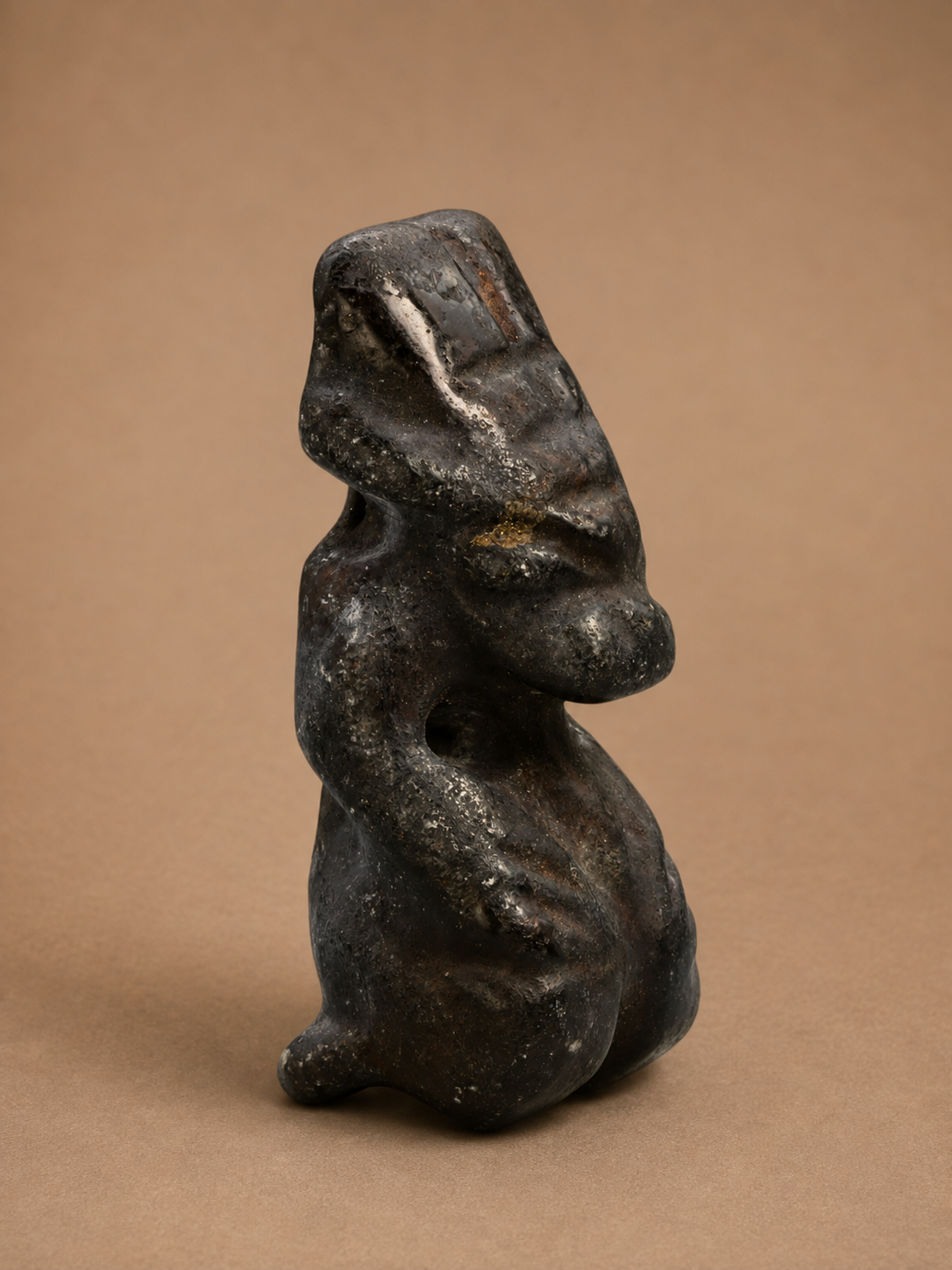
Antique Eastern Stone Fertility Effigy Figurine with Rounded Form, c 18th-19th Centure
Antique Eastern Stone Fertility Effigy Figurine with Rounded Form, c 18th-19th Centure
Regular price
$195.00
Regular price
Sale price
$195.00
Quantity
Couldn't load pickup availability
Description
This rare stone-carved effigy, weighing 175 grams (6.2 oz) and measuring 3.3 inches (8.5 cm) tall by 1.4 inches (3.5 cm) wide, embodies the abstract, deeply symbolic artistry of ancient Eastern or Southeast Asian tribal cultures. The figure's exaggerated lower body and smooth, organic contours point to its likely function as a fertility or maternal symbol, evoking themes of birth, renewal, and ancestral power.
Carved from a dense, dark stone with natural mineral inclusions and age-softened edges, the piece reveals both intentional shaping and the effects of centuries of handling. A subtle indentation at the midsection and broad hips suggest a feminine form, while the abstracted face and sloping head emphasize spiritual or mythic identity over realism. Such figures were often revered as protectors of the household or community, connecting the living with the divine or ancestral realm.
Its powerful curves and minimalist features resonate with Neolithic and tribal aesthetics, recalling global traditions in which form follows spiritual function. This figurine was likely used in shrines, ceremonies, or as a totem of continuity and prosperity. The pierced hole through its side may indicate suspension or ritual use.
For collectors of ethnographic and tribal antiquities, this effigy offers both sculptural presence and cultural depth. Its primal design speaks to humankind's earliest symbolic languages-invoking life, mystery, and protection through the simplicity of stone.
Provenance:
Acquired from a Southeast Asian antiquities dealer, early 2000s
Condition:
Very good condition with natural surface wear consistent with age. Matte patina and earthen deposits enhance its authenticity.